Real-world delivery proof
Live ESP validation (Brevo) showing delivered, bounces, blocks, and inbox events for MyCQL-exported data.
- 613 emails sent via Brevo (live SMTP)
- 100% delivered
- 0% hard bounces / 0% soft bounces
- 0% blocked / 0% spam complaints
- Engagement events observed (opens, clicks, unsubscribe)
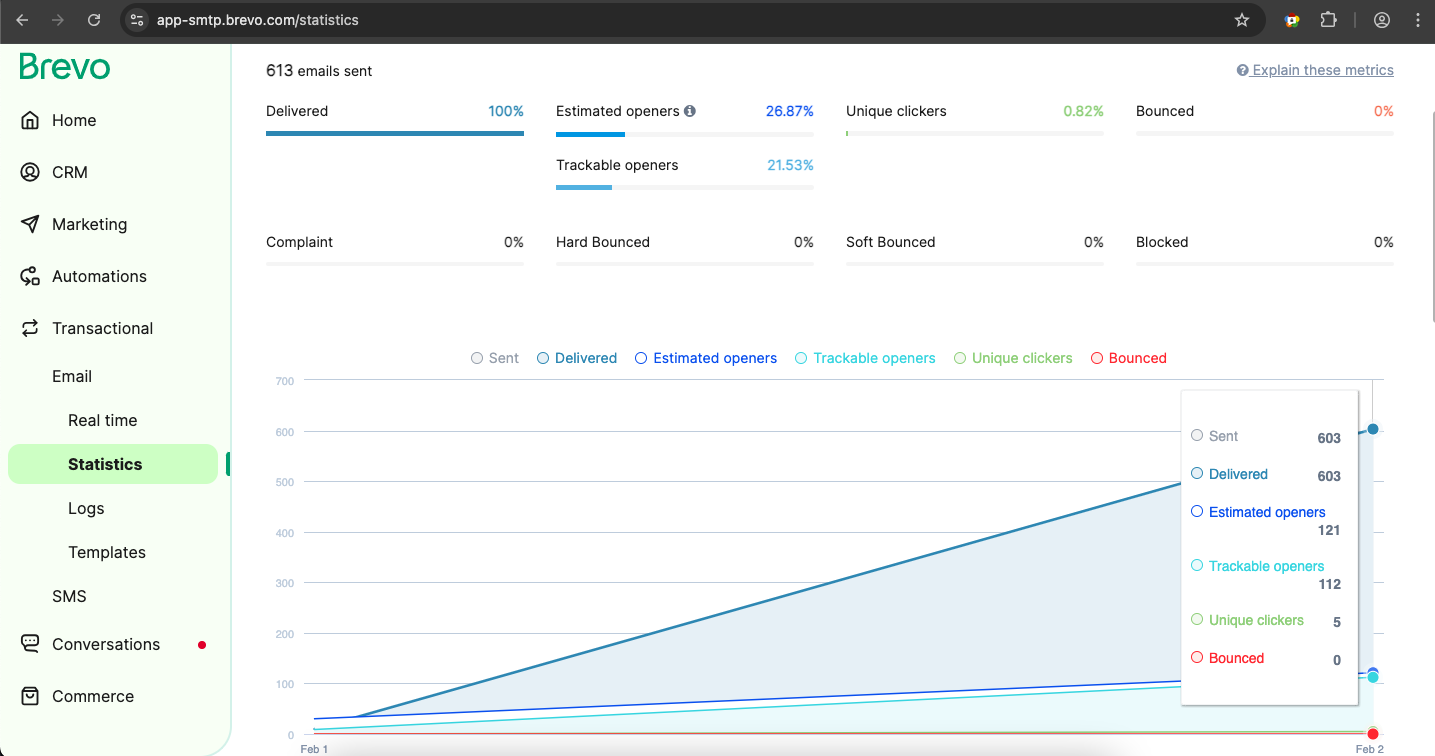
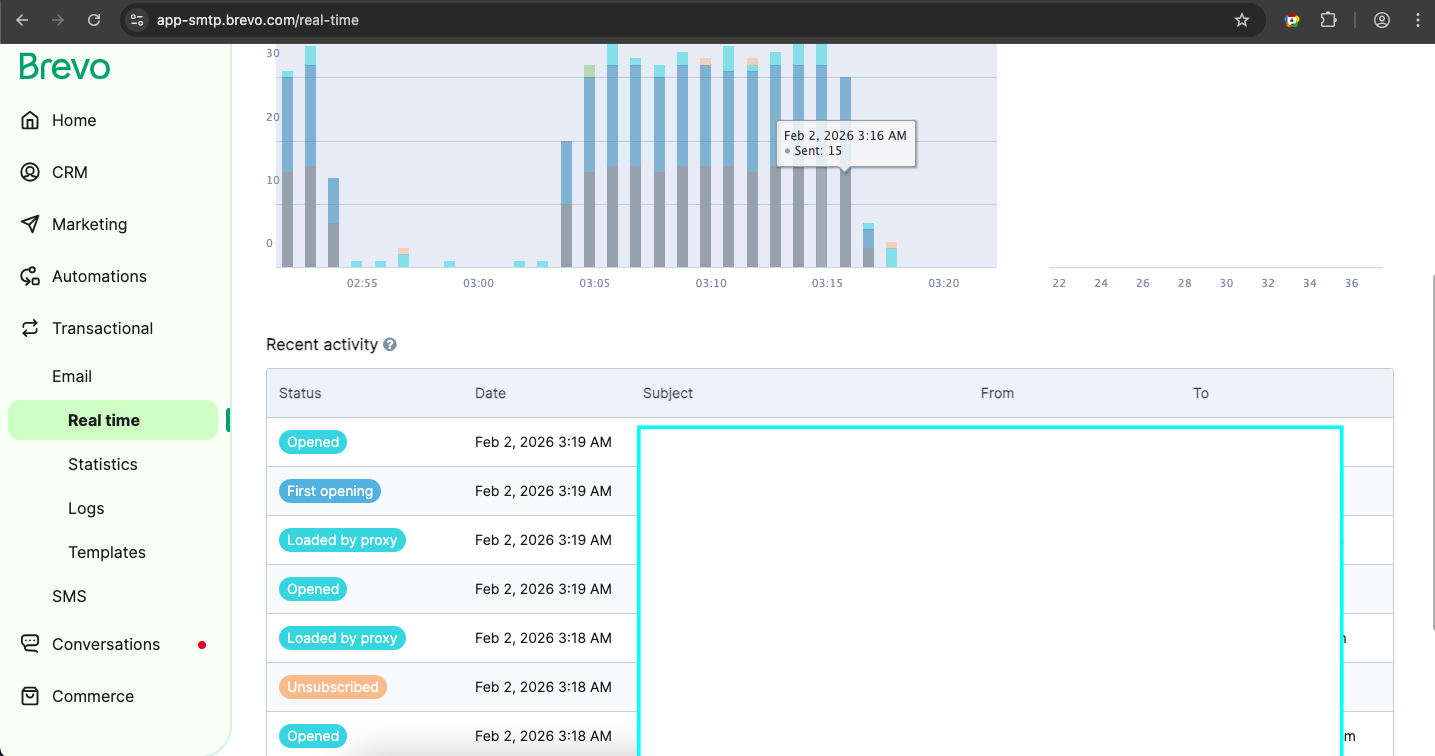
This is a small, controlled send using MyCQL-exported data. The goal is to prove real inbox placement with measurable engagement (opens + clicks), not just “sent”.
- 49 events (Brevo real-time)
- 49 delivered (100%)
- 34 trackable opens (~69%)
- 33 clicks (~67%)
- 1 bounce (soft bounce) — typically temporary (greylisting, mailbox limits, server delays)
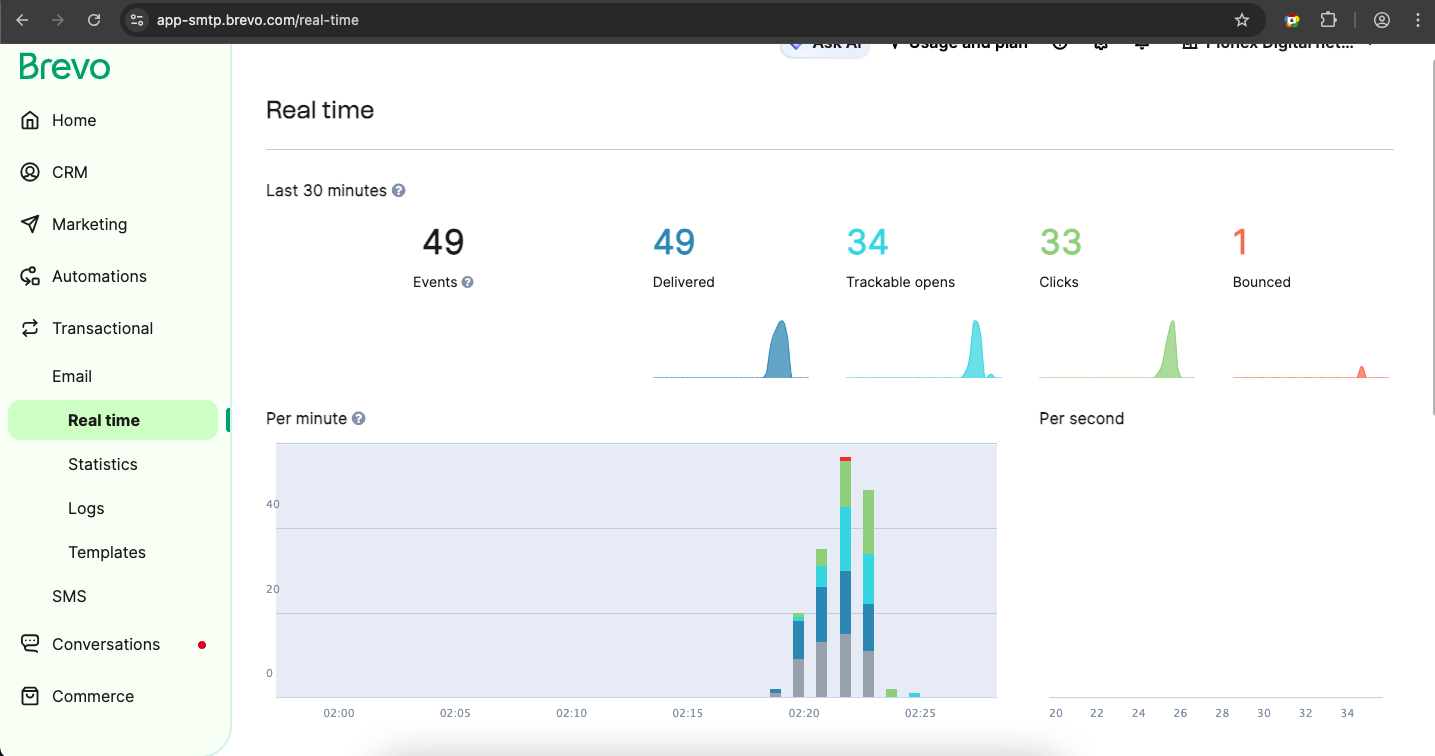
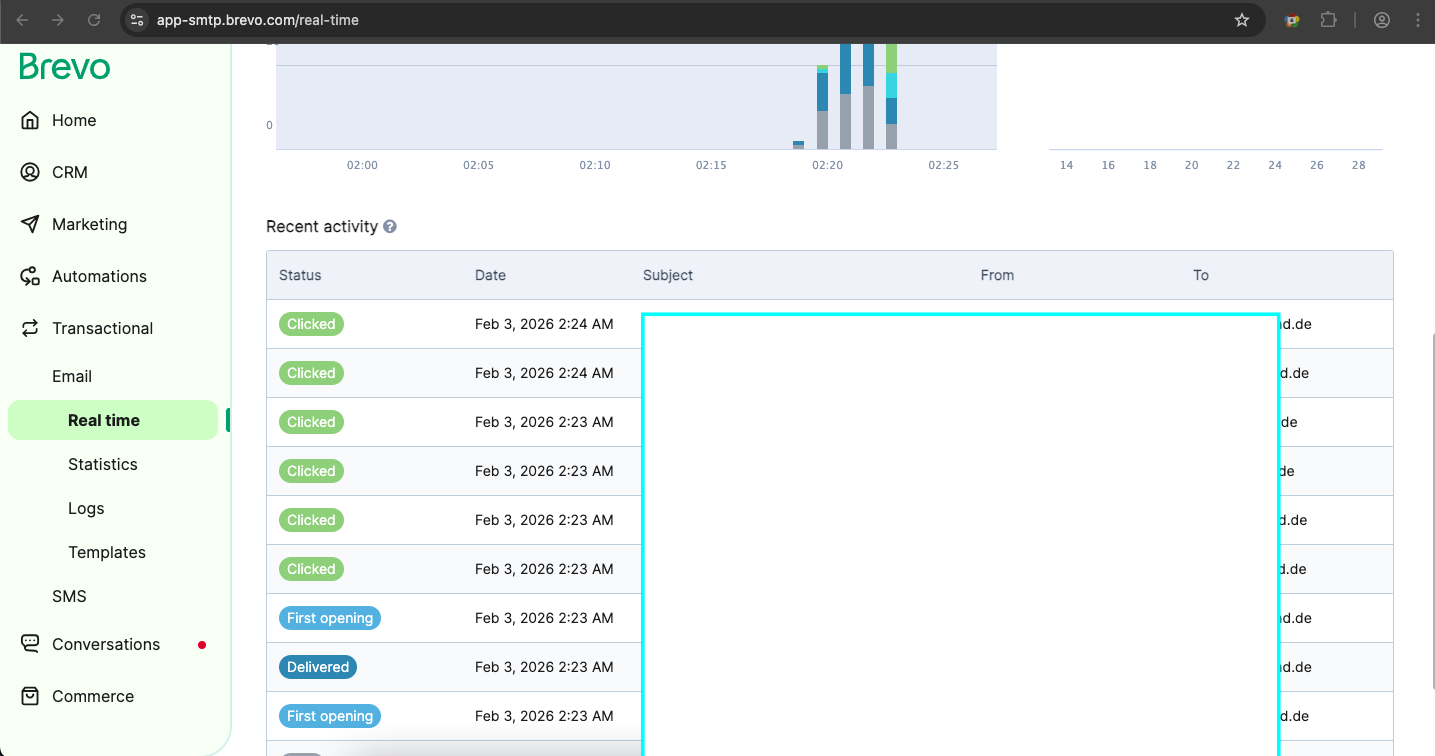
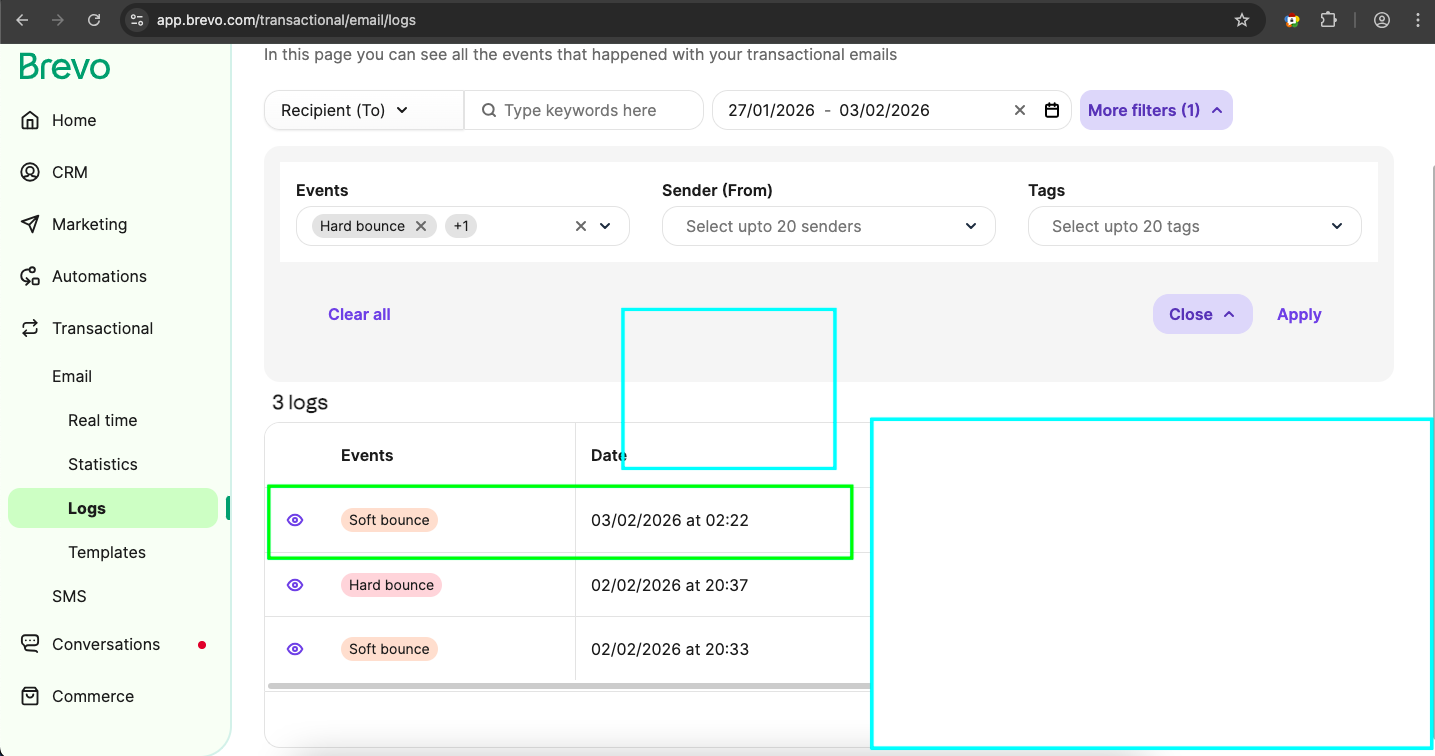
This send was performed using Balanced mode (the MyCQL default). Balanced is built for maximum quality + reputation safety. Layer-4 validation remains active and strict, which is why deliverability is usually extremely clean in this mode.
- 0 bounces in this window = inboxes were accepted by destination servers (provider-level success).
- Low clicks / opens here does not mean “bad leads”. Engagement depends heavily on timing, offer, and message quality.
- In this example below, the send time is likely outside normal working hours in the (UAE example) — many recipients are offline / asleep, so clicks and opens stay low.
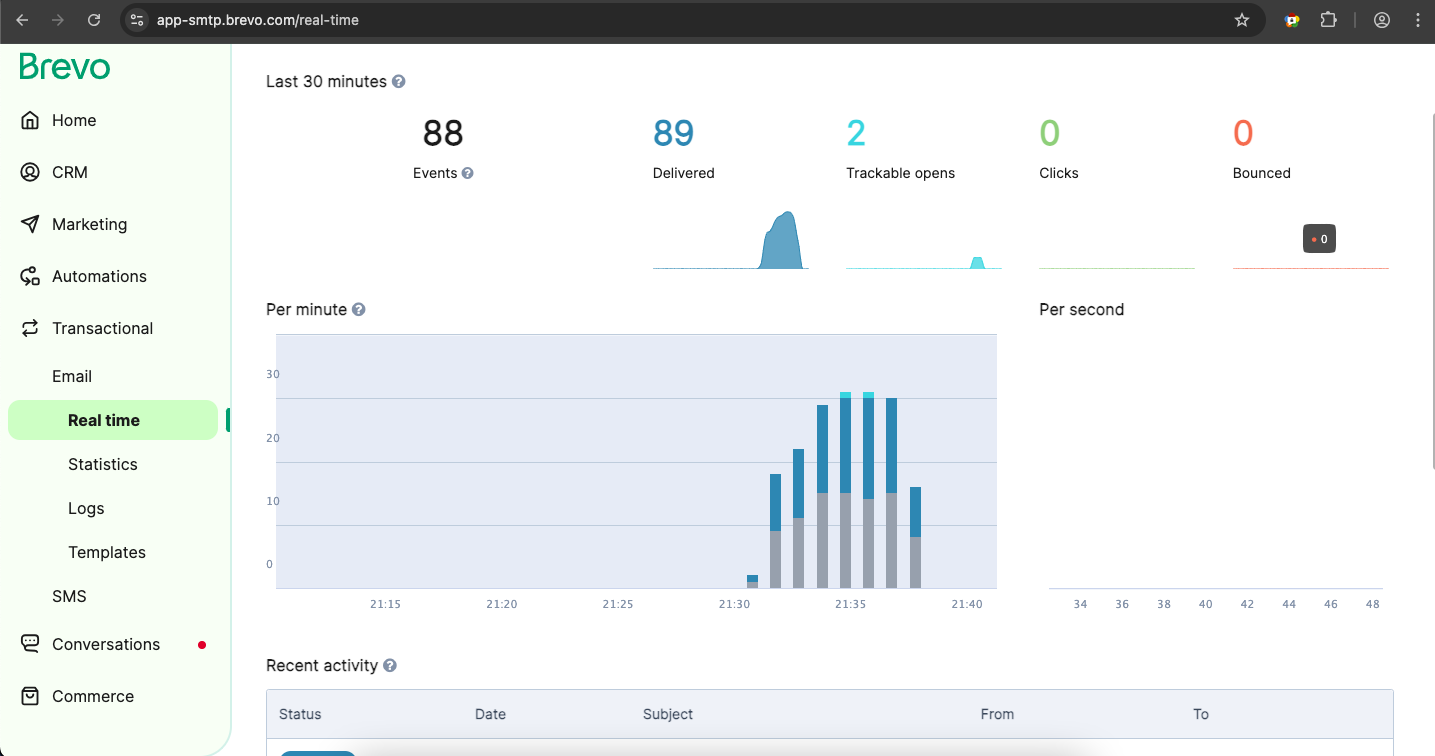
- Schedule sends for the recipient’s local business time (UAE): 09:00–12:00 or 13:00–16:00.
- Avoid late-night sending unless you’re testing or warming up.
- Run A/B tests: subject line + first sentence matter more than any tool.
When is the best time to send?
Deliverability and engagement improve when you send during a high-response window in the recipient’s local time. Our controlled tests are intentionally sent in clean windows (no spikes) to avoid provider suspicion and maximize inbox placement.
- Weekdays generally outperform weekends for B2B.
- Morning → early afternoon (local time) often yields better opens/clicks.
- Avoid huge bursts from a cold domain — warm-up matters.
- Timing helps, but timing alone is not enough: you also need clean data + good reputation.
The “diamond” formula: 4‑Layer verification + domain reputation
How to interpret this proof
- Delivered means destination servers accepted the emails (no provider-level rejection).
- Hard bounce is usually permanent (non-existent inbox).
- Soft bounce is often temporary (busy server, greylisting, mailbox limits).
- Opens/clicks confirm real inbox placement and real recipient interaction.
- Unsubscribe events are a trust signal: they prove messages reached real humans with opt-out options.
My Custom Qualified Leads